Author Archives: Alice Leiper

Alice Leiper is an eager reader of fantasy and aspires to become a professional writer. She blogs about her experiences, observations and opinions on writing and fantasy on her website, Ally's Desk.

Fantasy Weapons – the Good, the Bad, and the Ugly

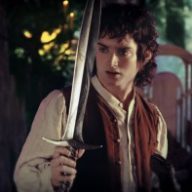
Frodo with Sting

Frodo with Sting

In fantasy, weaponry is something we’ve come to expect to see.  There are wars, battles, even personal fights against a single rival, and that means the combatants need something to fight with. Sometimes fists are enough; sometimes magic is used. But the rest of the time, there are weapons.

One thing fantasy weapons sometimes come under fire for, especially swords, is that they’re all fancy pants spikes and dragon motifs and not a huge amount of practicality.

Below is a catalogue of some weapons you might have read about in fantasy, looking at what makes them good or bad in different ways.

How to Spot Your Weaknesses as a Writer

There’s a question that crops up on writing forums a lot: how do I improve my writing?

And quite often, the most common advice is “read and write lots”. Which is perfectly fine advice. Knowing what’s good and practicing your craft are great ways to imrpove.

But there’s only so far that advice can take you. At some point you’re going to need to follow a third piece of advice:

Know your weaknesses.

By identifying weaknesses, you can work harder on improving that aspect of your writing rather than just practicing everything and hoping for the best.

Fight for What’s Right: Moral Causes in Fantasy Worlds

We all want our protagonists to be engaging and for our readers to root for them.  One way to achieve this is to give the protagonist a goal which the reader sympathises with.

For some, it is to save a life or find something of value. For others, it is to change the world, to pursue a grand cause and improve life for thousands of people.

But it isn’t always that simple.

What cause do you pick, and how do you make it relevant and believable?

Using History as Inspiration for Fantasy

Gerard Butler in 300

When others learn I am a writer, one of the most common questions I am asked is “where do you get your ideas from?” Now the obvious answer is “everywhere,” because life is inspiration for fiction.  But one of those places where it is easiest to draw the direct correlations between what I see or learn and what I write is in history.

Some of you might, at this point, be thinking, “Oh yes, kings and knights and castles and all that. What’s new about that in fantasy?” But history encompasses so much human lived experience, and we can use it in far more intricate and interesting ways than just including an idealised image of the medieval world.

Howl’s Moving Castle: A Review of Its Adaptations

Howl's Moving Castle

Howl's Moving Castle

Howl’s Moving Castle by Diane Wynne-Jones was one of the first fantasy books I read. I bought it at a book sale at school, and loved it right away. Since then, I have bought it a further two times, after previous versions got lost or were lent to someone and never returned.

Because Howl’s Moving Castle has always been one of my favourite books, and because I had enjoyed films such as Spirited Away and Kiki’s Delivery Service, I was understandably excited when I learned that Hayao Miyazaki of Studio Ghibli was making a film adaption.

Suspense and Pacing in Fiction

Oscar Wilde

There are many components to a good novel. An intriguing plot, relatable characters, suitable setting, fluent prose – to name but a few. And also suspense. To keep a reader, you need them to want to know what is going to happen next. You need them to have this constant curiosity, this yearning to find out how characters deal with their problems – or make new obstacles.

There are two ways to go about this. The first is to have a vague and mysterious prologue. A character wakes up on a beach with no memory of their life before that moment, or they have a premonition or strange dream, or the villain gives his right hand man a vague yet sinister instruction. Sometimes it works. Often it falls flat. Why?