Labelled by TIME as “The Dean of Harry Potter Scholars,” John Granger is a pioneer.
When many were dismissing the significance of the Hogwarts Saga, or condemning the books for “promoting witchcraft,” John was the first literary critic to explain how they carry on the tradition of English fantasy literature. His book, How Harry Cast His Spell, shows readers how J.K. Rowling used classic literary techniques to weave a timeless story that connects with the hearts of readers.
I recently spoke with John about the popularity of fantasy literature, and the secrets of writing a great fantasy story.
What draws people to fantasy literature?
I think Mircea Eliade was right when he wrote that reading serves a mythic or religious function in a secular society, which is to say that we read fiction in general because it offers us an escape from or transcendence of our ego existence.
Continue Reading »
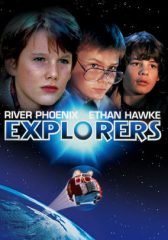
Writer and director Eric Luke has worked on films for Paramount, Disney, and Fox TV. He’s the writer of the science-fiction cult classic Explorers, which starred Ethan Hawke and the late River Phoenix.
I recently chatted with Eric about story development and narrative structure, as well as his latest project, the self-aware audiobook Interference.
How did you get into screenwriting?
I’ve wanted to make movies ever since I can remember. I picked up the family wind-up 16mm camera, started shooting, and very quickly found out I’d need a narrative to keep people interested. The first scripts were more like verbal storyboards, and I’ve always tried to hang onto that: just enough description to get an image into the reader’s head, then onto the next and the next: a really fast read.
Continue Reading »

James D. Macdonald is the award-winning author of over forty fantasy and science fiction novels, including his most recent work, Lincoln’s Sword. I recently chatted with Jim about his frequent collaborations with co-author Debra Doyle, as well as his work in educating writers about publishing scams.
You’ve had a pretty amazing career as a fantasy author. Can you tell us how you got started in the genre?
I got started in the genre by reading an awful lot of fantasy when I was young. Fafhrd and the Grey Mouser, the Chronicles of Prydain, pretty much every word that Robert E. Howard ever wrote, Tolkien, and endless others. My father had been reading and collecting science fiction since the ‘thirties, so we had the house filled with fantasy and science fiction.
So, fast forward a few years. I was a young sailor, with a girlfriend in Philadelphia, a bookish young lady.
Continue Reading »

Divine Hammer: Kingpriest Trilogy, Volume Two (Cover)
Imaginative Realism is the art of painting or drawing what doesn’t exist. It’s the act of bringing visual life to fantasy, often based on the words of fantasy authors.
Several months ago I knew Marc Fishman to be an amazing artist and an insightful human being, and A Song of Ice and Fire was just a series of books that people kept pestering me to read. Then an HBO series (Game of Thrones) based on the books came along, and I decided to live tweet during it for Mythic Scribes. I read the first book, watched the series and was hooked.
Shortly thereafter I learned that Marc was illustrating a limited edition version of George R.R. Martin’s A Dance with Dragons.
Continue Reading »

The Hantaa Series
The Haanta Series is the longest ongoing fantasy series on the internet. As of September 2011, the series covers twenty-nine books and over nine-hundred short stories. I recently had the pleasure of chatting with its author, Michelle Franklin, about the joys and challenges of writing an online series.
How did the Haanta series get its start?
It was 2010 and the winter holidays. The recession came around and I was laid off at Christmas. By that point, I had given up on a previous series I was writing and hadn’t published a short story or article in six months. When I was laid off, my friend and editor said to me, “You know, you haven’t written in a while because work has been killing you. Why don’t you take this time to write something new?” I felt that she was right.
Continue Reading »

Brian Wood
Brian Wood’s first novel, Dreamworld, has been described as witty, clever and humorous. I recently chatted with Brian about his novel, as well as the challenge of balancing humor and drama in a fantasy story.
How did you become interested in writing fantasy?
In the sixth grade my brother Drew gave me a copy of The Eye of The World by Robert Jordan, and I was hooked for life. As for writing, it wasn’t until a few years ago that I became interested in possibly writing a fantasy novel of my own. After a few months and a couple of interesting reads, a truly unique idea literally dropped into my head while I was at a Mexican resort with my wife. After that, I had no choice but to write my series. Otherwise, the idea would have burnt a hole inside of me. It just happens that Dreamworld, my debut novel, was the first piece of writing (of any kind) that I ever wrote that was longer than ten pages.
Continue Reading »

Raistlin Majere
A key element of any successful novel is a cast of vivid, compelling characters. I recently discussed the topic of character development with author Frank LaVoie, whose debut novel Firesoul has been praised for its colorful characters. We also chatted about the special importance of characterization in the sub-genre of High Fantasy.
You are an unabashed fan of so-called “epic” or “high” fantasy. Can you elaborate on what sets this sub-genre apart from other forms of fantasy?
High Fantasy serves as the category’s best example in terms of defining the archetype. Typical structures might include the questing hero, a supportive band of allies, fantastical settings, magic as a vehicle for both good and evil, and a vast array of other fictional and far-fetched elements.
Continue Reading »
For every first time author, finding the right publisher for your novel can seem like an impossible feat. I recently had the opportunity to chat with fantasy and science fiction author Terry W. Ervin II, whose debut novel Flank Hawk has received impressive reviews. Terry was kind enough to share his own journey to publication with us.
How did you first become interested in writing fantasy, and at what point did you decide to write a novel and see it through to completion?
I became interested in fantasy around the 7th grade. My sister brought home The Sword of Shannara by Terry Brooks. I read it twice and was hooked on fantasy. A second novel that impacted me was The Broken Sword by Poul Anderson. It captured my imagination and made me wonder if I could write something like that. It never went much further than that, although I continued reading and playing fantasy RPGs.
Continue Reading »