- Thread starter
- #181

Jabrosky
Banned

Perseus and Andromeda's Embrace
The Greek demigod Perseus embraces the beautiful Aethiopian princess Andromeda, but Poseidon's sea monster Cetus is ready for a rematch.
In Greek mythology, Andromeda was a princess of Aethiopia (i.e. "land of the burnt faces", usually referring to ancient Kush or Nubia in what is now Sudan) whom Perseus rescued from Cetus in a classic example of the damsel-and-dragon narrative. Perhaps the most well-known adaptations of this myth for modern audiences are the Clash of the Titans movies (I am referring to both the Harryhausen and Sam Worthington versions here), but I referenced none of these when drawing my own take. Perseus's winged helmet does owe some inspiration to Benvenuto Cellini's sculpture though. As for Cetus, I chose to represent him as some kind of Mesozoic sea reptile like a mosasaur or pliosaur.
I apologize if Perseus looks bored here. He's supposed to be nervously eying Cetus on the side.
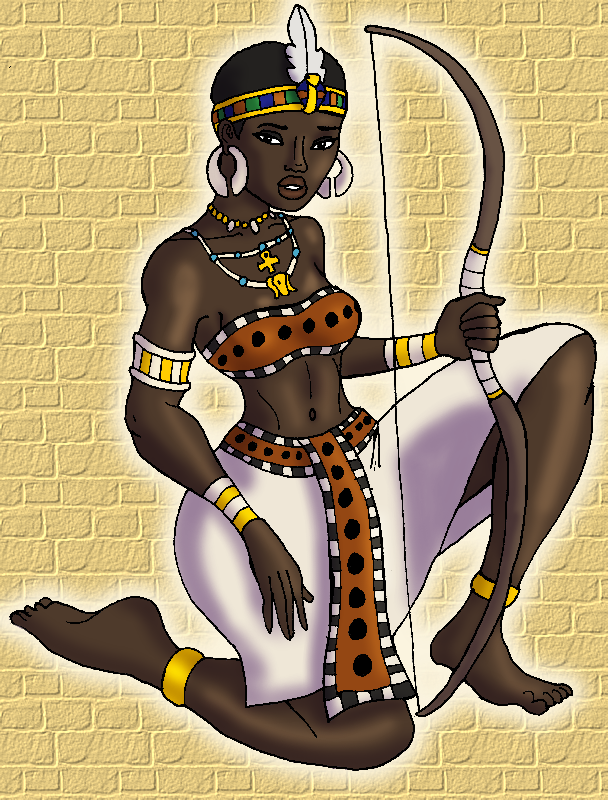
Andromeda's Pin-Up
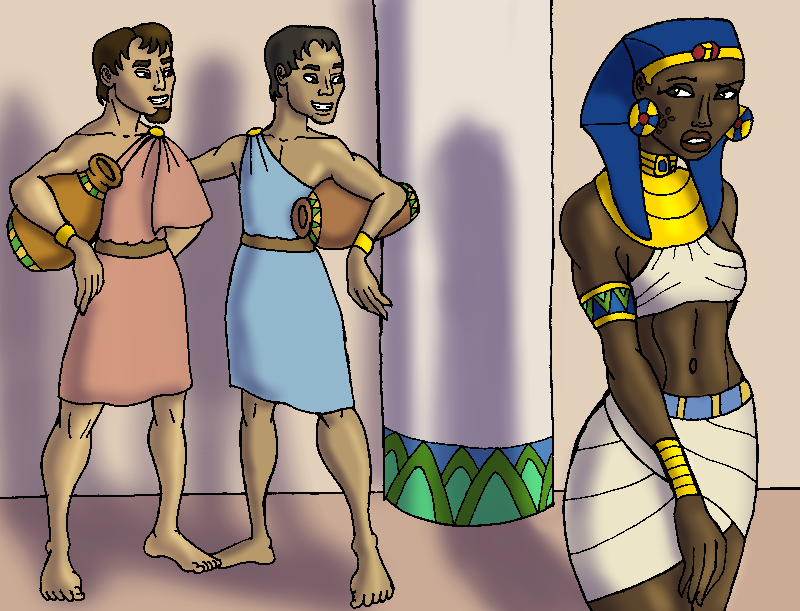
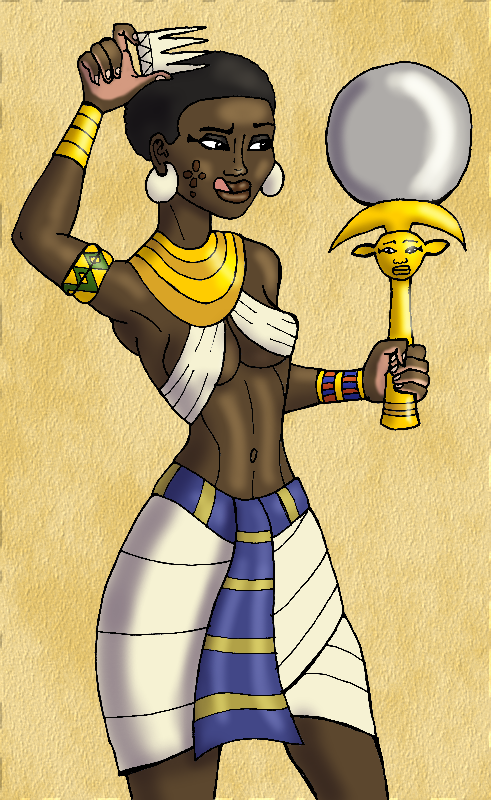
This pin-up is supposed to depict a warrior princess from ancient Kush or Nubia, a kingdom in northern Sudan that historically rivaled Egypt. The Greeks called the Kushite people Aethiopians ("burnt faces") and praised their piety, beauty, and martial skills in literature. In Greek mythology the demigod Perseus married a Nubian princess named Andromeda after saving her from a sea monster, and together they would found the city-state of Mycenae.
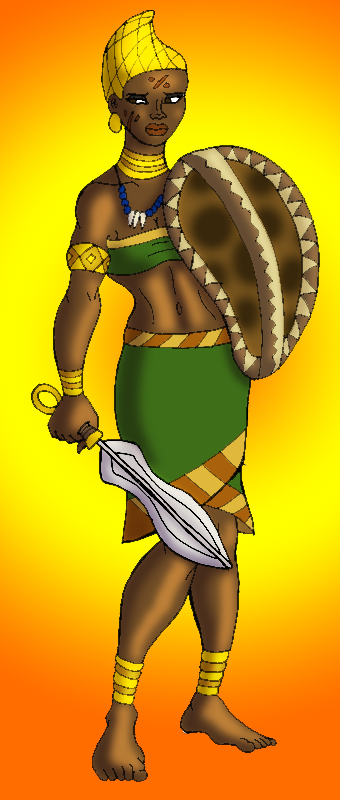
Queen Myrina of the Libyan Amazons
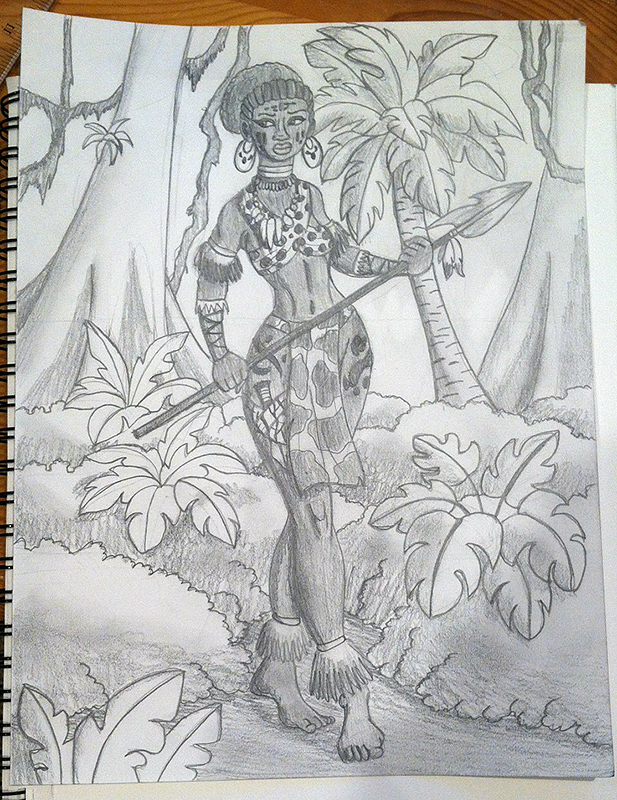
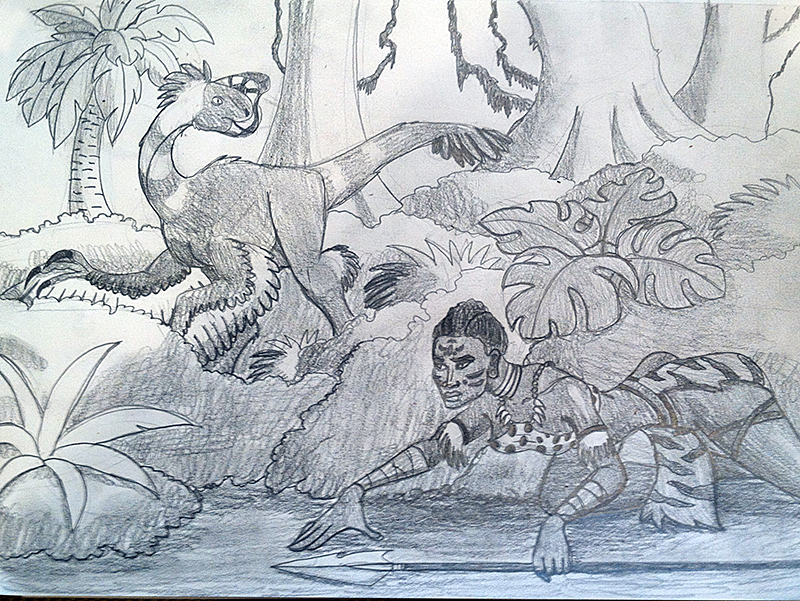
Although the Amazons most people know from Greek mythology were said to live near the Black Sea northeast of Greece, the Greek historian Diodorus of Sicily did describe a second race of warrior women living "in the western parts of Libya" (i.e. Africa west of the Nile). They had a fearsome matriarch named Myrina who led them against enemies as diverse as the Atlanteans, Gorgons, Arabs, and Anatolian Cicilians. Obviously Diodorus's account of Myrina's military career sounds more fanciful than plausible, but I'm tempted to speculate that his reports of warrior women in classical West Africa might have more than a grain of truth to them. They could have been the precedents to the famous female warriors of Dahomey (in modern Benin).




 Minstrel
 I really like the detail you put into the back ground and the shading looks great!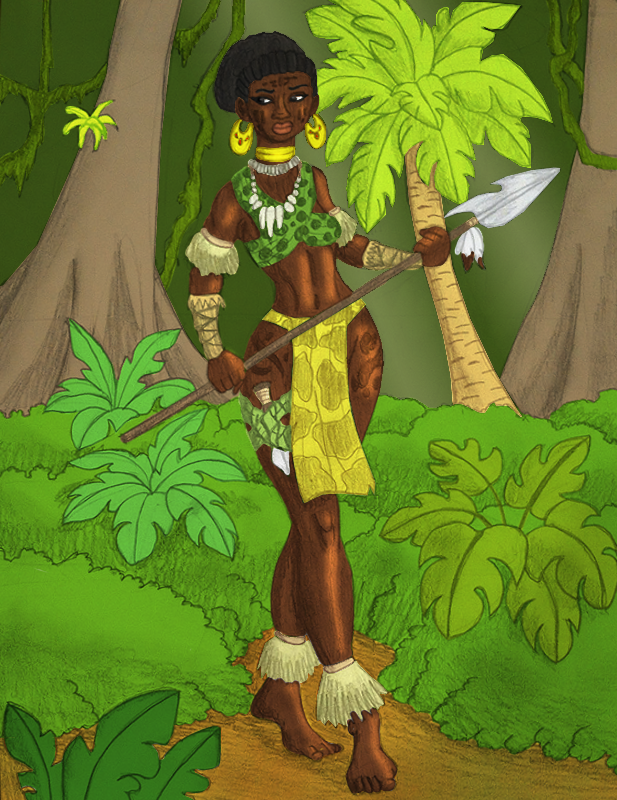

 Auror
Auror