• Welcome to the Fantasy Writing Forums. Register Now to join us!

Soulslike Fantasy

Gurkhal

Auror
I don't know if there will be much interest for this but here goes.

For those who don't know Soulslike is a genre of action rpg video games that are pretty famous, and infamous, for their difficulty and fair but unforgiving style.

Soulslike - Wikipedia

This thread is dedicated to discuss Soulslike fantasy. There are a few such stories published, most of them to my knowledge drawn from the genre creating series of video games called Dark Souls.

I figure this is a thread for both the initiated and the curious who would like to know more about this style of fantasy and a discussion on how to write in this, so far, small genre of fantasy.

Some loose thoughts from me on this is...

To me the defining elements of a Soulslike setting would be a dark, but not hopeless, often ruined and a desolate world where characters of a friendly or even just a neutral disposition to the protagonist are far between and hard to find but treasured when found. The setting also, most often, have a kind of dystopian feel to it with a sense of significent loss of something, something which isn't here anymore but once made the world more, while neither perfect or even good, bearable or not-as-bad.

In terms of mood and feeling I think that hope that there is hope and refusal to give in to despair despite how bad everything is, is fundamental. It should look really dark and bad but with hints of embers of something better that can perhaps be salvaged. The world can't be restored but something can be done to make it a shade less dark.

*****

As a personal example I once wrote a draft on paper for a short story called "The Dragonbane Knight" about a knight searching for a wyvern/dragon (I didn't get into specifics) that he was compelled to kill and how he at each encounter with it got a bit further towards killing it, but slowly lost his sense of self, his memory and motivation beyond a forced compulsion that it was something he had to do no matter what. In true Dark Souls fashion the main character died alot at the hands of this draconic foe and each time he was torn from the grasp of death by a burning light to start all over again and each time parts of him was torn away by the darkness or burned off by the light.

The part about memory was exemplified by having various trinkets with him and how he started to wonder what they meant and why he carried them. Until he simply didn't know or care.

*****

What are you thoughts or questions on this subject?
 

Devor

Fiery Keeper of the Hat
Moderator
"Bleak" tends to come in and out of style. Right now people feel bleak about their future, so the mass audience has shifted away from bleak storytelling. People feel bleak enough and want to get away from that feeling. There's always some audience for it, though.

Could you talk more about what the difference would be between Soulslike and Grimdark in a novel, though? In a video game it's hard, but you start over and try again, and eventually either get to the ending or give up. I've seen a handful of stories where the character dies-and-tries over and over, but I don't imagine that's a whole genre. I guess it would be the modern version of grimdark?
 

pmmg

Myth Weaver
I am interested in how player death becomes part of the story. Does player death mean they awaken again with some greater knowledge? It sounds as if its expected for growth, but it really should be the end. Can you explain it further?
 

Devor

Fiery Keeper of the Hat
Moderator
I am interested in how player death becomes part of the story. Does player death mean they awaken again with some greater knowledge? It sounds as if its expected for growth, but it really should be the end. Can you explain it further?

I assume I'm the one you're asking.

In most of the stories I've seen it's done as a time loop. A webtoon that I was reading recently had an arc where a priestess found out they were unsealing a dragon, and she went through a process of sacrificing her magic to activate a time loop. A second priestess, who had no idea what what the hell was going on just that a dragon kept killing everyone, had until the first priestess ran out of magic to figure it all out and stop it.

On the other side, there was an anime where all of the characters were trapped in a video game. Whenever they died, they would resurrect at the shrine, just like in the game - but lose some of their memories of their life in the real world. A lot of the stories there were about protecting the people of that world, who were previously "NPCs" and couldn't revive, from other players while trying to find a way home.

I know I've seen other stories use a darker version of "losing some of your humanity" as a death penalty.

Then there's the returner trope, which is big in Korean Webtoons. The MC dies as one of the last humans in the dungeon apocalypse, wakes up at home in Korea on the day the apocalypse begins, and has to figure out how to get some remnant of society to survive it all. Sometimes there are multiple returners from multiple timelines, and the story happens on the last one.

I've seen a lot of similar stories in Webtoons and Anime. For novels I favor more traditional storytelling, so I don't have any good examples there, except that I've read about characters hopelessly dragging their friend's bodies on the goal of getting them resurrected.
 

pmmg

Myth Weaver
I can see how it would become maddening to lose part of ones memories upon awakening.

I hate to say...but the drugs I am on lead me to having delusions. And in part it they are creating false memories, and they are quite jarring.

But...why not just death. Isn't death a sufficient punishment for...death?
 

Devor

Fiery Keeper of the Hat
Moderator
Anyone who has the answer, I suppose ;) But I was actually asking the OP.

Ah, my bad, I forgot that the OP mentioned it in the example. I was only thinking about his description of the genre and thought I was the only one who mentioned the die-and-try thing.

I can see how it would become maddening to lose part of ones memories upon awakening.

I hate to say...but the drugs I am on lead me to having delusions. And in part it they are creating false memories, and they are quite jarring.

But...why not just death. Isn't death a sufficient punishment for...death?

I've seen stories where dying over and over is itself enough of a penalty. It depends on the story's vibe and how often the deaths occur and which characters are going through it. "I can no longer remember my mom...." is like this noble type of suffering. "I'm jittery and nuts because I've had my head cut off fifty times" makes for a very different character. And that is very different from: "Dying has cost me my sense of compassion, are you worried that without it the enemy will convince me to turn against you?"

:confused: I'm sorry to hear about your meds, that bites man.
 

Devor

Fiery Keeper of the Hat
Moderator
Dude, now that I'm thinking about it, I can't believe I forgot one. There's a webtoon that is the frigging ultimate entry in repeated deaths and a hopeless apocalypse.

The Warrior Returns


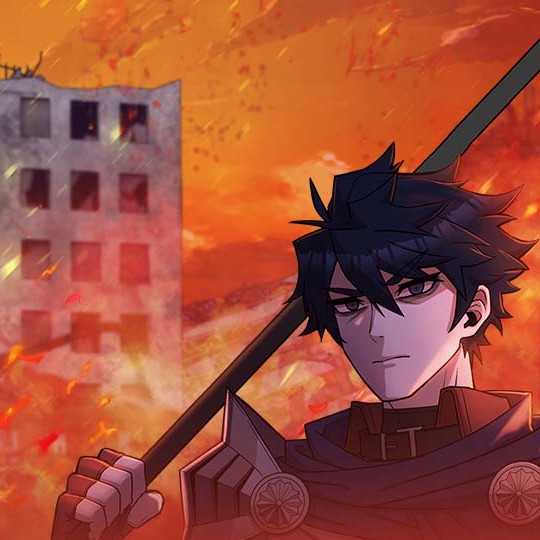
Damn it is heavy. A character was summoned to another world and becomes an overpowered sword hero, defeats a demon lord, comes home to discover everything he cared about was ruined while he was gone, and he flips out. We soon learn that there are multiple heroes with powers from different worlds, some of whom join the sword hero in his epic flip out, including one known as the Resurrection hero....

Saying anything more would be an unethical spoiler. But I will say that the Resurrection hero has died... hundreds of thousands of times.
 

pmmg

Myth Weaver
Ah, my bad, I forgot that the OP mentioned it in the example. I was only thinking about his description of the genre and thought I was the only one who mentioned the die-and-try thing.

None of that. We are all friends here, and the thread is open to any who wants to reply. Those with the passion for the topic are the best.

:confused: I'm sorry to hear about your meds, that bites man.

The drugs have been pretty trippy. They make be very drowsy to the point of giving me narcolepsy, and they create strong dreams, so I nod of, have strange dreams, and wake up thinking they are true, and it can happen in a very quick time span. I wish I could explain it, cause sometimes its quite fantastical, and very compelling, and then...its not real, and my brain has to reset.

One small example might be, I am thinking of a way to respond to this thread, but I due to the narcolepsy, I just nod off. In my dream, I type out a long response, but then you reply, and I type another long message. In time, we have been talking about something with a great depth of meaning...but then I will wake up, and my screen will be on some strange internet page, like something selling me car insurance, and there will be a moment of dissonance. What the hell am I doing on this screen, and where did MS go? Then I realize...none of it happened. Some of my delusions have been very trippy. In one, I thought I had a secret to the future no one else knew, but I was trapped and was the only one stuck in the current phase of the world. In a day or so, it would reset, and I would be lost, and know one would know. So...I had to do something drastic to prevent it. <--that one was in the hospital, so the drugs were stronger ;)

Its a very strange experiences. I think everyone should have a change to experience it, but I've had enough of it now. I am ready to go back to regular life. But....the drugs and delusions will continue for a time. They just aren't as strong anymore.


The Warrior Returns

What you posted starts on episode 159, shouldn't it start on 1? Or...is that all part of the time loop and 159 is episode 1....
 

ThinkerX

Myth Weaver
After reading the Wiki...

I suppose one of the series of tales I dabble in occasionally might fall into this category.

Two characters, one contemporary/recent past (late 80s to present), the other, 'fifty years from now.' The thing is, they are different incarnations of the same soul. They are aware of each other and are occasionally in a position to communicate. There is also a third incarnation from several centuries in the future.

Basically, the first character got drafted along with many others into the 'Game of the Gods' between Lovecraftian deities. That 'Game,' parts of which took place in far-future times and places, left him partially mentally unanchored in time, permitting intermittent contact with future incarnations of himself. This character appears a couple of times in the current WIP.

The second character is an agent during the 'Lovecraftian Sideswipe,' an eldritch apocalypse that went pear-shaped for everybody. Some of the actions of the first character are relevant to this fiasco. He features in a couple of shorter stories.

The third one is 'the astronaut,' a crewmember on a starship that is involved in the Game.
 

Karlin

Sage
I can't get away from thinking that RPG means Rocket Propelled Grenade. I guess I have been playing the wrong games.
 

Gurkhal

Auror
"Bleak" tends to come in and out of style. Right now people feel bleak about their future, so the mass audience has shifted away from bleak storytelling. People feel bleak enough and want to get away from that feeling. There's always some audience for it, though.
On this I agree. What is fashionable in trends come and go. Trying to catch on to them is usually futile so its better to write what you want to write and write that well.
Could you talk more about what the difference would be between Soulslike and Grimdark in a novel, though? In a video game it's hard, but you start over and try again, and eventually either get to the ending or give up. I've seen a handful of stories where the character dies-and-tries over and over, but I don't imagine that's a whole genre. I guess it would be the modern version of grimdark?
I will confess I am not overtly knowledgeable about Grimdark, so what I write is based on "Warhammer 40 000" and "Trench Crusade". And given how both Grimdark and Soulslike are sub-sub-genres of the Dark Fantasy sub-genre of Fantasy I would say that there will be some overlap between them.

Anyway...

What I would think are different between the two genres, in general as Soulslike is very much not nearly as large or developed in literary form, to my knowledge, as Grimdark is, is that in Grimdark everyone's a bad guy. Some are worse than others but there are no clear cut good guys. In Soulslike you can have clear heroes or good characters even if they are struggling and fight tooth and nail for every step to victory. Furthermore in Grimdark it often seems to me that there's little hope for improvement on a larger scale but in Soulslike I would think there's more agency and embers of hope. Yes, the world is often ruined, dark and desolute but there are, unlike Grimdark, embers of hope that can, potentially, be carefully nourished back to some weak strength and the horrific existance can be made a bit more bearable piece by piece in small, small steeps. One at a time.

The way I see the dying-and-try-again part in Soulslike Fantasy is that, yes, the main character(s) are likely to survive being pulverized and gruesomely killed since they are returned after death but there might be reason as to why they can't wear down the opposition through repeated attempts until they succeed. Things like a time limit or them eroding with every death are two ways to make the stakes high on if they will succeed or not. But I don't think this is necessary to Soulslike Fantasy even if its common in such games. I think the more important principle in this would be the understanding that nothing comes easy and that you have to fight long and hard to make progress towards your goals and be ready to learn from your mistakes so that you can do better now and in the future. While these things are common in many stories I would imagine they are central to the Soulslike genre of fantasy.
I am interested in how player death becomes part of the story. Does player death mean they awaken again with some greater knowledge? It sounds as if its expected for growth, but it really should be the end. Can you explain it further?
I think the most important principle about this is about setting a goal, working hard, learning and doing better and better until you've reached that goal in triumph. Having a protagonist die and then return to try again is just one way to do it that makes it Soulslike. Other ways can also work but I think that trying and learning and improving from setbacks is the important part. And then you can add various aspects to it and how it would work in a specific story.

Now this can naturally negate a sense of danger but I would argue that if these undying characters are on a time limit or erode with each death or something like it, then its important that they succeed as fast as they can to perhaps prevent some great evil to provide some comfort to suffering people or make a dark world a little more bearble to live in.

For example maybe the character is trying to hunt down a monsterous warrior who kills people for sport. And every time the character dies this antagonist gains another month to murder innocent people for the thrill of feeling his power over them. That would give a sense of urgency because while the character can always try again, how large will the body count grow before they succeed in their mission? Especially if people dear to the character are at risk of getting killed while the antagonist rampages across the land.

I assume I'm the one you're asking.

In most of the stories I've seen it's done as a time loop. A webtoon that I was reading recently had an arc where a priestess found out they were unsealing a dragon, and she went through a process of sacrificing her magic to activate a time loop. A second priestess, who had no idea what what the hell was going on just that a dragon kept killing everyone, had until the first priestess ran out of magic to figure it all out and stop it.

On the other side, there was an anime where all of the characters were trapped in a video game. Whenever they died, they would resurrect at the shrine, just like in the game - but lose some of their memories of their life in the real world. A lot of the stories there were about protecting the people of that world, who were previously "NPCs" and couldn't revive, from other players while trying to find a way home.

I know I've seen other stories use a darker version of "losing some of your humanity" as a death penalty.

Then there's the returner trope, which is big in Korean Webtoons. The MC dies as one of the last humans in the dungeon apocalypse, wakes up at home in Korea on the day the apocalypse begins, and has to figure out how to get some remnant of society to survive it all. Sometimes there are multiple returners from multiple timelines, and the story happens on the last one.

I've seen a lot of similar stories in Webtoons and Anime. For novels I favor more traditional storytelling, so I don't have any good examples there, except that I've read about characters hopelessly dragging their friend's bodies on the goal of getting them resurrected.
Very interestig to read about these takes on the general idea of dying-and-returning.
I can see how it would become maddening to lose part of ones memories upon awakening.

I hate to say...but the drugs I am on lead me to having delusions. And in part it they are creating false memories, and they are quite jarring.

But...why not just death. Isn't death a sufficient punishment for...death?
Yes, if each death comes with a penalty than this immortality might not be such a nice thing to have as a cursory view might imply.
Ah, my bad, I forgot that the OP mentioned it in the example. I was only thinking about his description of the genre and thought I was the only one who mentioned the die-and-try thing.


I've seen stories where dying over and over is itself enough of a penalty. It depends on the story's vibe and how often the deaths occur and which characters are going through it. "I can no longer remember my mom...." is like this noble type of suffering. "I'm jittery and nuts because I've had my head cut off fifty times" makes for a very different character. And that is very different from: "Dying has cost me my sense of compassion, are you worried that without it the enemy will convince me to turn against you?"

:confused: I'm sorry to hear about your meds, that bites man.
More good examples how dying-and-returning can be tied to a cost that makes it a pretty bad thing for the characters to repeatedly die.
I can't get away from thinking that RPG means Rocket Propelled Grenade. I guess I have been playing the wrong games.
Depends on. Do you like explosions and casting non-magic missiles? :D

 
Top