• Welcome to the Fantasy Writing Forums. Register Now to join us!

To map, or not to map?

Have any of you reached a point where you just absolutely felt you needed a map to ground your writing?

I recently took 3-4 days off from actually writing to generate and then customize an Azgaar's map.
The action in my story takes place in a few far-flung locations, and geography is a key driving force in the world.

I had held off on doing this, knowing that - to some extent - creating a map locks you into staying within its confines. But I'd hit the point where I was no longer sure how far apart locations were, how long travel would take, whether the sun rose behind or to the side of certain mountains, or where a river originated.

Azgaar's is a great tool, I think. I spent quite a bit of time setting up the weather and biomes, and I've just added the handful of locaitons/markers I needed to reorient myself. Not planning to constrain myself by filling in all the empty spaces on the map.
that is so cool i am new to writing so i had no clue i could do that
 
When I started planning my series, the very first thing I did was create a map.

I used the website "Inkarnate". It has really cheap subscriptions, I want to say its like $5 a month?

The tools are incredibly easy to use, and they have thousands of various art assets like houses, castles, trees, mountains etc to place around the map once you have the shape down. It's also easy to make rivers and lakes and stuff.

Once I had my map set it actually really helped me create my cities and then write lore articles for each city because if I put a large city near the coast but also on the mountain range I knew it would be a culture that used ships and the sea etc.

Anyways it was incredibly useful for me over the course of my book planning.

Good luck with your writing!
 

Malik

Auror
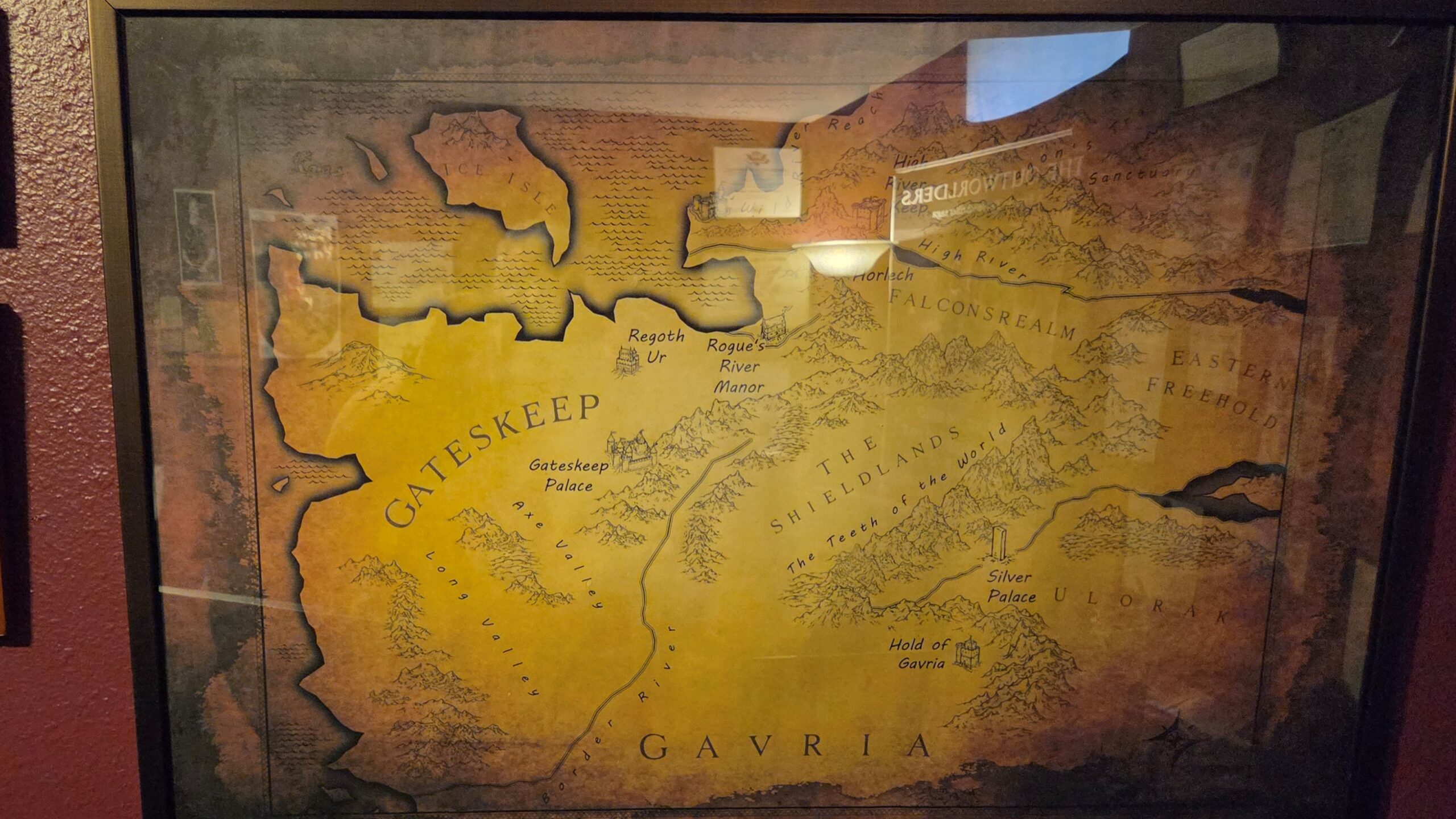
I keep a framed 36x48 wall map above my desk for quick reference.

I also sell copies at signings. Readers seem to think it's nifty.

20260605_164217-scaled.jpg
 

Malik

Auror
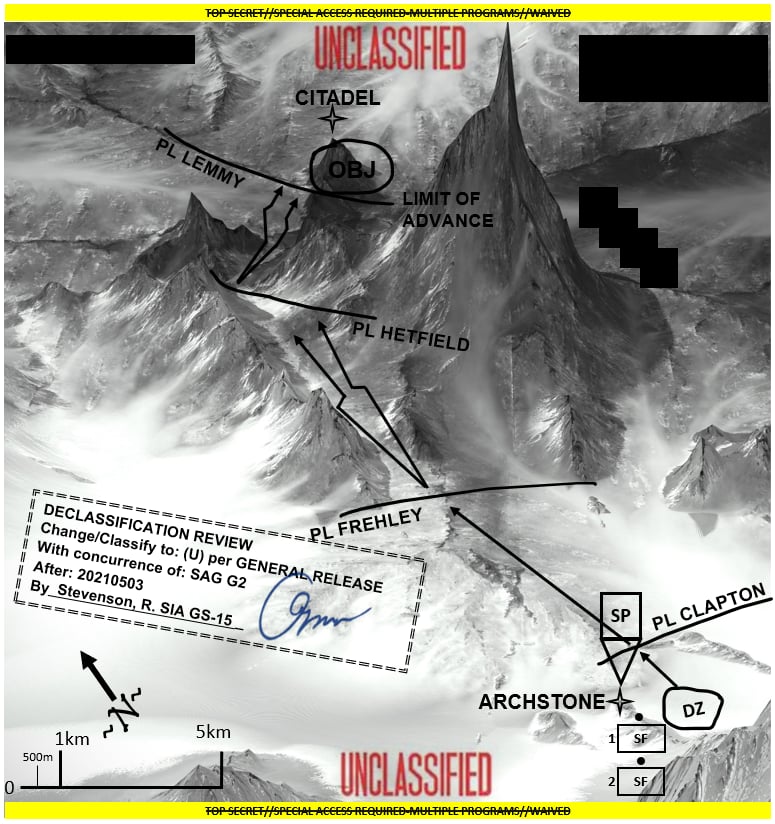
Also, this, from STONELANDS, which you can find in the book. It's a military SF/fantasy crossover, and having been an intelligence analyst and briefer, I couldn't have written the book without not only a map, but military symbology and graphics for each mission.

I made this up exactly the way I would have made up a 2/3 shop [Ops/Intel[ map, only for the Pentagon to NOPE a few sections.

Messenger_creation_A20E0E6C-E172-4090-AA2F-9FFBDDB91058.jpeg
 

skip.knox

toujours gai, archie
Moderator
Maps:

Size: 600 x 800 is what fits on a Kindle screen or a standard 5.5 x 8.5 book page.

Use bold/thick marks and print. Thinner/fainter lines/text can go missing.

Keep the font size readable. 11 point minimum. 12 or 14 point preferable.

Use a font that people can actually read.
I agree with the last three lines, but I'm pretty sure that print requires better than 600x800. Scale to a larger size for print; you can always downsize for the e-readers. The usual advice is 300dpi, which is not the same as pixel ratios. Here's a reference
Common Map and Book Sizes for RPGs: A Guide to Easy Map-Making for Authors and Creators — ART REALMS
but just an example, a 6x9 paperback would use 1800x2700 pixels. Assuming you want the map to fill that page.
 

ThinkerX

Myth Weaver
I agree with the last three lines, but I'm pretty sure that print requires better than 600x800. Scale to a larger size for print; you can always downsize for the e-readers. The usual advice is 300dpi, which is not the same as pixel ratios. Here's a reference
Common Map and Book Sizes for RPGs: A Guide to Easy Map-Making for Authors and Creators — ART REALMS
but just an example, a 6x9 paperback would use 1800x2700 pixels. Assuming you want the map to fill that page.
600x800 is for Kindle use.

My 600x800 maps did come out fine in the print version.
 

Mad Swede

Auror
600x800 is for Kindle use.

My 600x800 maps did come out fine in the print version.
We've discussed artwork dpi before (here: Book cover artwork DPI) and the general rule is that you should be using as high a resolution as you can for your original artwork, including maps. My publishers guidance is very clear, at least 600 dpi for colour artwork and 1200 dpi for black and white artwork. They also say not to think in terms of screen size (800x600 or whatever), because what is shown on screen can and will be adjusted for an e-book. Yes, this does mean your original digital (or digitised) artwork will result in a big file, but it is always possible to reduce the image resolution before publication. What doesn't work is trying to scale up the image resolution later.
 
Top