
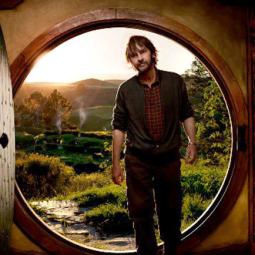
Since the announcement that The Hobbit will be a trilogy, the Internet has been abuzz. The Tolkien fan base has been divided into two camps: those who are elated at the news, and those who believe that it’s a terrible idea.
Those who are apprehensive of the films becoming a trilogy have raised some valid concerns. For this post, I’ve identified three of the most repeated concerns, and will show why they should be dismissed.
This is About Money
It’s a recent trend to take the final book in a series, and divide it into two films. Famous examples of this are the finales of the Harry Potter series and the Twilight Saga. Whether or not this is positive, one thing is for certain: the studio will make more money from two guaranteed hits, as opposed to just one.
When Peter Jackson began talking about extending his two film adaption into a trilogy, there’s little doubt that MGM and Warner Brothers were excited by the thought of more money. But what about Jackson himself? What is motivating him?
I’ve never met Peter Jackson, but I feel like I know the man. Having sat through countless hours of DVD commentaries and special features, including extensive behind the scenes documentaries, I know how he works as a filmmaker. And if there’s one truth that I’m convinced of, it’s that Peter Jackson is an artist with integrity. He is driven first and foremost by his desire to tell a good story, with all other considerations being secondary. If you doubt this, watch the four and half hour documentary by Costa Botes.
If Jackson wants to film The Hobbit as a trilogy, it’s because he believes that this is the best way to tell the story that he envisions.
The Hobbit is Too Short
Another common objection is that The Hobbit is only one book. It made sense for The Lord of the Rings, which is three volumes, to be filmed as a trilogy. But it’s impossible to stretch The Hobbit into a trilogy without running out of material.
To see the other side of this, first consider how much was cut out of Jackson’s interpretation of The Lord of the Rings. Think about the absence of the Barrow-Wights, Radagast, Tom Bombadil, not to mention the Scouring of the Shire. There simply wasn’t enough time to fit everything into just three films.
Still, even if Jackson includes every event in The Hobbit, it is hard to imagine filling three epic-length movies. So what does Jackson plan to do with presumably nine hours of screen time?
As he has stated, Jackson intends to film other events that were in the background of The Hobbit. As fans of the book know, Gandalf alludes to an evil Necromancer taking residence in Mirkwood, and vanishes for half of the adventure. What was Gandalf doing during his absence?
As explained in the appendices of The Return of the King, Gandalf and the White Council were planning an assault on the fortress of the Necromancer, which culminated in the epic Battle of Dol Guldur. The details of this storyline are fleshed out even further in Tolkien’s Unfinished Tales of Númenor and Middle-earth. The Necromancer, as it turns out, is none other than Sauron himself, and the events in this storyline set the stage for The Fellowship of the Ring.
Again, these are events alluded to in The Hobbit. The difference is that rather than having characters speak of them in passing, Jackson is going to show them to us as they unfold. And if he does justice to this storyline, he has more than enough material to fill an epic trilogy.

The Hobbit is a Children’s Book
This objection stems from the perception that The Hobbit is a light, whimsical children’s book. Jackson cannot translate it into a Lord of the Rings sized epic without drastically altering the tone.
There is some truth to this. The tone of The Hobbit is considerably different from the later trilogy, and to keep it consistent with his Lord of the Rings films Jackson will have to make it more “grown up.” But the good news is that if you are looking for a whimsical, child-friendly interpretation of The Hobbit, one already exists. The Rankin-Bass version of The Hobbit still holds its own, and there’s no reason to revisit that approach.
Instead, Jackson is following Tolkien’s own lead by reframing The Hobbit in light of the greater history of Middle-Earth. When Tolkien first wrote The Hobbit, he didn’t realize that he was setting the stage for a three-volume history of the War of the Ring. After The Lord of the Rings was published, Tolkien went back and revised his children’s book to make it fit into the larger picture. This involved changing some events, as well as including the allusions to the Necromancer storyline. This was in keeping with what he did in the appendices of The Return of the King, where Tolkien spelled out the epic events taking place in the background of The Hobbit.
While Jackson’s version of The Hobbit will differ from the children’s book, it will be consistent with Tolkien’s larger vision of how the story fits into the history of Middle-Earth.
A Cause for Rejoicing
Peter Jackson did what was thought to be impossible: he delivered a faithful, spell-binding adaptation of a book that was thought to be “unfilmable.” While his version of The Lord of the Rings differs in some respects from the source material, it is faithful to the spirit of Tolkien’s work.
There is no reason to believe that Jackson would do anything to deviate from his prior faithfulness to Tolkien’s vision. On the contrary, the evidence shows that he will once again deliver a film that captures the essence of the source material. His behind the scenes videos from filming The Hobbit, as well as the footage shown at Comic-Con, make this clear.
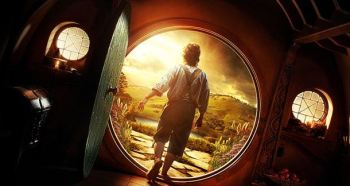
For those who cherish every minute spent in Tolkien’s Middle Earth, there is no reason to fear a third Hobbit film from Peter Jackson. Instead, this is a cause for rejoicing.
Do you disagree? Tell me where I’ve gone wrong.

One movie, not three.
I am glad, we need something good, am tired of some of the things out there.
Before LOTR came out in movie form, I got ahold of an old radio broadcast of both The Hobbit and LOTR. I was intrigued by both stories and am glad that The Hobbit will now come out in a film trilogy. Great stories.
I have to admit that I was dead set against the story being turned into 3 movies. I was never concerned about it being too childish as I’ve never really considered The Hobbit as a child’s book. I was questioning where they would get enough material that would not end up being boring. You have allayed that concern very nicely.
Polgara I can see why The Hobbit is considered a child’s book, as it’s much more juvenile in tone than LOTR, although I do think it’s for older children due to its length.
Lyrie I second that, Lyrie. I remember being forced to read The Hobbit in 4th grade and I just couldn’t stay focused on it. It took me years before I decided to give it another chance and found that I actually enjoyed it.
@KellySGamble @mythicscribes No surprise if Hobbit films have no Misty Mountains but plenty of stuff that wasn’t in the book at all.
@javaguysammckee Misty Mountains are in the film. Jackson’s latest video blog shows them, along with the Great Goblin (Barry Humphries).
@KellySGamble @mythicscribes I’d love to see a 3-film Hobbit IF he doesn’t completely bastardize the story like he did with LOTR.
@KellySGamble @mythicscribes Almost any novel is way too big for just 1 film.
I only hope they don’t do to “The Hobbit” what they have done to so many of the Arthurian works. Some of those movies have gotten so far away from the legends that it hurts to watch them.
Yay!!
Antonio, thank you for this post. You’ve alleviated a lot of my concerns about The Hobbit. I should know better than to question Peter Jackson, to be honest.
I think it would be wonderful that he wants to expand the novel. It’s really just more to enjoy for the fans of the series. The writers did a fantastic job with the first trilogy and I have no reason to think that they won’t do the same with this novel. I’m sure they would be able to come up with a storyline that will please the producers and the public.
Mike Rapino, for an explanation as to how this will work, please read the above article. It lays out how Jackson is using Tolkien’s other writings to flesh out the story. In particular, it explains that there is an epic storyline in the background of The Hobbit, in which Gandlalf and the White Council go to war against the Necromancer in Mirkwood. All of this is spelled out by Tolkien in his Unfinished Tales, as well as the appendices of The Return of the King. There’s more than enough material there for three films.
I just don’t think there is enough material for 3. Can you reasonably come up a Act 1, 2, and 3 that will each justify a two hour plus movie? I’m open to someone suggesting in outline how this could work. There just imo enough material without taking a lot of creative liberties. IF and I don’t think this is true the Tolkien family has allowed liberal use of Tolkien’s other writing such as Similarion, then maybe. But last I heard Similarion was out of bounds for Jackson.
My biggest issue is the lack of material for a trilogy. Even if they are going to show the assault on the Necromancer (and didn’t he flee instead of give battle?), that still doesn’t seem like enough for three full-length movies.
I am very happy to hear that Peter Jackson is making The Hobbit into a trilogy. The more detail the better, as far as I’m concerned, and I’m excited at the prospect of him delving into the details of things that were only alluded to in the book. Count me in Camp Elated.
Peter Jackson loves a challenge PLUS he knows he is representing Tolkien in his movie adaptations. I think his care is well placed here rather than worrying about what Hobbit or LOTR fans think. Jackson will make the Hobbit bigger and better than LOTR because he & his team are far more experienced now and will help blend The Hobbit seamlessly into the following trilogy of the Ring. Well done Peter…
If anyone can do it, it would be Jackson. I know a lot of people hate what he did with LOTR, but I thought the films were excellent. If he’d attempted anything more than what he did, we’d have ended up with 5 or 6 films, but he kept them focused on the journey of the ring, and that meant not using a ton of material that I’m sure even he hated leaving behind. I suspect even with 3 films, he’ll have the same issue with The Hobbit, and he’ll still manage to do it justice.
No matter what he does people won’t be happy. I think The Hobbit deserves the same consideration and attention to detail as the LotR trilogy. If Jackson DOESN’T make this movie into a trilogy, people will complain about the lack of something. So what do you do?
As stated in the article, doesn’t it seem more likely that Peter Jackson is motivated by artistic ambition than greed?
I don’t think Jackson is solely motivated by money, but I know his studio is. As far as The Hobbit being light and whimsical, I think the trailer for the movie has some of that, but it bears a much darker tone than I expected. I’ll reserved judgment until I see the movies for sure, and I think Jackson will deliver.
He may be, but still not a good idea. BUT i will see them.
I agree with Mike. I think it’ll be good for fans to able to see more than one movie, but stretching a short book like The Hobbit into three movies is really “stretching” it. It’s the same strategy they’ve used for Harry Potter and Twilight. Either way, I’ll probably go see them all, but I’d rather they just make one big, long epic movie than three.
@Philip Overby Actually, turning The Hobbit into a 9 hour film trilogy isn’t much of a stretch at all. The unabridged audio version of The Hobbit is 11 hours long! We’ve just gotten used to books being severely cut to fit into a film. Jackson wants to tell the whole story this time.
Worried it isn’t going to represent the book at all, but I’m sure it will be good.
I think it’s a terrible idea. The Hobbit is 310 pages, and then there’s the extra material. 2 movies was a stretch. This is a money grab nothing more. It’s a bad Hollywood trend (see breaking dawn, Harry potter, now the last book of hunger game). It made my decision to not see it until it is fully available to buy.
I think it’s a terrible idea. The Hobbit is 310 pages, and then there’s the extra material. 2 movies was a stretch. This is a money grab nothing more. It’s a bad Hollywood trend (see breaking dawn, Harry potter, now the last book of hunger game). It made my decision to not see it until it is fully available to buy.
But if he does another king kong I’m kicking him in the friendlies.
What about him? He is getting paid.
If it was anyone else I would be worried but he did a good job on the last 3 so I’m going to let it slide.
Aaron Cornett It may be about the money for the studios, but what about Peter Jackson?
All about the money.
The mere fact so much is cut from amny books just to turn them into films is argument enough for me. The Lion, the Witch, and the Wardrobe was a full-length movie from a book that is around 100 pages. It’s the most faithful adaptation I know (as in, very few deviations from the book) and demonstrates just how much film time comes from very few pages if you actually tell the whole story. LOTR was filmed in three movies. But it could just as easily have been 9, or more. It wouldn’t be, because most audiences wouldn’t stand for it, I expect, but the material was there. I don’t believe in 1 movie, 1 book. I want the STORY. The whole story. I don’t care how many movies it takes.
I loved reading The Unfinished Tales and delving deeper into the Hobbit through it. I’m so excited that he’s going to pull from that. And of course I still have my fingers crossed that he’ll move on to The Silmarillion (another trilogy?)
Tony,While I think you wrote an excellent article, I just want (for once) ONE movie for ONE book. To add the appendicies and the “in the background” I feel shouldn’t be there. This is the story of The Hobbit and was told from Bilbo’s perspective, so it should stick to Bilbo’s perspective. Bilbo only heard about what was going on, he wasn’t there which is why it wasn’t written in his journey. Even you stated that Tolkien didn’t realize he was going to do this, so he had to go back and fit in a plot he never intended. While I think it’s interesting – because I do like The War of the Ring- it takes you out of the journey that you’re watching which is Bilbo’s journey. If Peter Jackson wanted to tell the story of The Necromancer, he could have an an independant film about the appendicies and “Gandalf’s Journey.” I just don’t think it belongs in the movie about The Hobbit and Bilbo’s Journey.
Great stuff Tony! I think that The Hobbit is going to be awesome.