• Welcome to the Fantasy Writing Forums. Register Now to join us!

Elven race / elves - what do you like about them?

Or what do you dislike about them as a fantasy convention? Do you write elf /elven characters into your own writing? What form do they take? What are their origins in your worldbuilding? What type of elf / Elven characters do you like creating? Or what do you like when reading / watching / gaming when it comes to elves?
 

Queshire

Istar
I prefer to keep my Elves relatively close to the classic model and change the situation around them. I've seen a fair few takes on Elves that often feel like the author giving the middle finger to the whole idea of them, and I'm sorry, but I can't stand that.

My big setting is a science fantasy setting.

In it the Dwarves might not have been the first race to experiment with space travel, but they were undoubtedly the most successful in those days. They were, however, limited to slower than light travel.

The Elves were the first to develop magical FTL travel to the point that it could be systematically employed. It was limited due to requiring massive Gates that basically function as magical Mass Effect Relays, and as a result was limited to only those systems hooked up to their network. Still, the fact that they had FTL at all meant that they could actually have an interstellar nation to begin with. In comparison the travel times required meant that each Dwarven colony basically had to be its own kingdom.

That lasted up until one Elven Queen's bid for godhood resulted in the destruction of their network. (Said Queen turned Goddess is meant to be a nod towards Lolth in D&D, but more in a general evil elf goddess type of way than specifically Lolth.)

It was a comparatively short time between the destruction of the Elven network and the point where magical FTL developed to the point that every ship could have a drive installed (think Star Trek or Star Wars) but it was still long enough that the isolation caused the Elven nation to completely shatter. Some planets formed their own kingsdoms while some other populations of Elves were absorbed into other nations.

The greatest unified Elven force is a remnant fleet from the previous nation that fights against the forces of the Queen-turned-Goddess. (This is a nod towards the Elven Armada in D&D's Spelljammer.)

Physically my Elves are biologically immortal, however the accumulation of spiritual/mental detritus over the years leads to madness and eventual mutation. Cultivating their magical abilities lets them push off this corruption. They don't need the increased lifespan and biological immortality that other races can obtain by cultivating their magical ability, but do benefit from the spiritual aspect.

With the Elven interstellar nation's shattering the Elves have developed in different ways. Some continue the tradition of arcane magic favored by the fallen nation, others focus on biomancy for magical genetic engineering or to grow living ships and those dark elves that have not been corrupted by the Queen-turned-Goddess rival the Dwarves in their craftsmanship.
 
They taste good with a decent honey barbecue sauce after a slow grilling. Chop up some wild onions or leek to go with it and some collards and they're a good meal.

That aside, I go all over when using elves. From hungry village burning forest dwellers to decadent drow and many in between.

Physically they're usually tall, kind of a mix of Pathfinder and Warcraft sorts. Big eyes, sharp pointy ears that could poke an eye out, that sort of thing. Sometimes they even get chubby.

This is just a generalization for me. Given my obvious preferences for the green beasties.
 

Insolent Lad

Maester
I've explored only one race of elves in any depth, and that is the Dark Elves. Who are not dark; they just prefer to live in dimly-lit caves and worlds. Of a height similar to a human, but generally more lightly built. Very pale of skin. No pointy ears, thank you (though the related goblin branch of the fay family tree sometimes have them). As all fay, some skill in magic is universal but they can not match the best human sorcerers. They avoid our sort in general but will interact if it becomes necessary. Or if they are bored; that happens, being more or less immortal and all that.

I've introduced but one High Elf (or High Fay) in any of my tales. He could pass for human (yes, they can and do grow beards. The male ones, that is.). He took pains to explain the 'high' part of his people's label is a mistranslation of 'tall,' and that they claim no special status otherwise.

Early on in my world building, I divided all human-like races into four peoples, corresponding to the four elements. I kind of ignore that now but we humans are the People of the Fire, who enjoy being out in the sunshine. The various fay--elves, goblins, ogres, kobolds, etc--are the People of the Air. Dwarfs and trolls are of the Earth and, of course, we have merfolk for Water.

Incidentally, not one of them is green. I reserve that for some tribes of demons, but that is another subject.
 

Saigonnus

Auror
I really don't dislike elves, per se. I find the trope of them being forest-dwelling, vegan, self-righteous fae jerks who live so long that their machinations can take centuries to resolve, as somewhat "MEH".

In my writing I don't use them; or fae in general, as there is enough diversity among humans to populate the universe. I did however have them as part of a AD&D campaign I ran for years, but I used homebrew rules. The "high elves" and "wood elves" (think extinction) were gone, and those that survived (the gray/dark elves) barely resembled their fae ancestors. The grey elves became "moon elves", who were nocturnal; subsisted on whatever they could scavenge (mainly meat and night-blooming foliage/fungus), they were masters of magic (my system didn't use the core rules either, so their focus was on the forms of energy more available at night.) Scarsity and evolution made them live only 150% that of humans, and their civilization was tribal, with a comportment was more like barbarians than fae.

The "dark eleves" became "shadow elves" and were forced into the overworld, where they took up residence in the deserts of the world; as they relied on the heat of the earth. Their skin faded to a crispy tan color so they could blend in with the dunes and landscape of the terrain, and were more crafters, builders, and jewelers than anything else. Their numbers dwindled from lack of food, but soon they started growing cactus farms, and raising giant lizards for food (and for mounts). They are also tribal; like their cousins, but their are strictly hierarchal and militaristic.
 

JBCrowson

Maester
In my world Humans were thralls to the demons until the end of the first god-demon war when they were released into the mortal realm to join the other races already there. Humans rapidly diverged into three lineages.
The first of which went underground since none of the other races had occupied that niche, and became known as the (trogl) odytes. The odytes developed excellent low light vision, but became sun blind so they are only seen on the surface at night when the brightest moon is not out.
The second group set up shop pretty much where they came out of slavery and stayed as regular humans.
The third group fled into the forest, fearing the demons would somehow come and reclaim them, and call themselves the fey. Their women folk became adept at stealth and camouflage like wood elves while the men became larger and larger as they trained in warrior arts until they resembled young wood giants.

I liked Tolkien's elves for their inherent sadness at having essentially failed to live up to their potential and fallen for their own hubris on more than one occasion. I'm less fond of the DnD style dark and high elves, though I don't mind the wood elves so much.

Can I ask what prompted you Finch to ask the questions that started this thread?
 

Gurkhal

Auror
When I use them I try to keep close to the classical vision of them.

One thing I've thought about is elves being kind of like sponges for magical energy. You would have all kinds of elves who have soaked up magical energy from various sources.
 
Lots of interesting takes on elves thanks for sharing your own versions and preferences.

I do pretty like the original model from Norse mythology, of which Tolkien modified for his worldbuilding, making them more humanoid. Crowson I agree with Tolkien elves having an inherent sadness to them which is I suppose attributed to their leaving Middle Earth by the time Lord of the Rings takes place. There is some aspects of fae / fair folk in their too I expect, with their tendencies to have an in built ‘glow’ and ethereal nature, or maybe even ephemeral nature.

I feel like the self-righteous, middle class vegan version was Peter Jackson’s interpretation of them on screen as I’m not sure I thought of them that way from the books, but I could be wrong. Maybe we correlate immortality to being wise, and being wise to being socially and economically higher in status… who knows.

I feel like elves are distinct from fae, so maybe my own version are less driven by trickery and deception, and more concerned with immortal issues.

I started writing a range of Elven races and so I was curious as to why others might be drawn to them, and how they use them, other than them just being a fantasy convention. For me, it was pretty much because they’re a fantasy convention that I wanted for write them, and of course their place in mythology. I like the challenge of writing characters who are immortal, and the questions that raises.
 

Mad Swede

Auror
I'm a little tired of seeing elves in fantasy stories, for me they have become something of a D&D style cliche in all too many stories. My view is that they have become overused.

So no, I don't use them in my stories. Which is not to say that "other folk" don't exist in the setting, only that the various characters in my stories have yet to come across whoever or whatever these other folk might be.
 

pmmg

Myth Weaver
Elven race/elves What do you like about them?

I like that they offer variety. I very much like the D&D model, where you have many different types, such as high elves, and grey elves, and drow elves. I like that they can be both as strange and as familiar as I want them to be. And to some regard, I like their easy understandiblity.

I think their greatest value is something to contrast against, so that humans can be displayed a little more in the contrast.


Or what do you dislike about them as a fantasy convention?

Well...overused maybe. A thing that may be in the reach of the lazy a little too easily. Typically brought in without a lot of innovation. Some may change an aspect or make up different names for their gods, but generally, about what I would expect from any RPG game, if I was to join one.

Generally, I like to see that we have dug deeper into them, and can bring more than just a few checkbox traits to them.

Do you write elven characters into your own writing?

Initially, I did, but over time I moved away from them and made a separate race instead. They are elf-like, in some ways, but not really elves (I dont spend time explaining they have pointy ears, for instance). Being far along in the tale, I do kind of wish I had just used only humans. but I didn't. The other races are separate, and have origins that would make them non-elves.

But, if someone was to say...hey, these are kind of like elves, well...so it seems they are.


What form do they take?

None, cause I dont use them. But...thats just my current tale. In another I might. I am sure I would start with what I like about D&D elves.

The race I have that is like elves, is mostly different culturally, and in their relationship to magic, such that...they have better use of it given various circumstances. They are more likley to have 'bright-metal' and some magic quality to their items. Appearance wise, they tend to be more a white-grey or ash color. They may have strange color eyes, or hair, but I have not really dwelled on it.

What are their origins in your worldbuilding?

To answer would take a lot of explaining the world....

Short answer, they are the second of the remembered races. Their actions led them to an exile, and they are far and hard to find. But their legacy still affects much of the world. There are many races that came before them, and so far, the Morkind and Geshi have come after. Their origins is that they sprang out of the creative energy of the world after the falling away of the race prior to them.


What type of elf / Elven characters do you like creating?

Well, again, I like the D&D variety-grey elves and drow and all that. But, I would never write such, as they are too much D&D (Less I was writing a book under their banner).

I like them to bring something into the story that is uniquely theirs. HIstory and lore, and a relationship with the world different from mere human types. I also like their immortality, and so show it in greater wisdom and perspective on things that only one who lived long could have.


Or what do you like when reading / watching / gaming when it comes to elves?
The only things I dont want while reading is to be calling BullSh*t a lot. Along those lines, I also dont want to be feeling like they dont have anything to add, and/or they were just lifted or stolen from other works.

Otherwise, I am happy if any want to include them. The idea of beautiful, graceful other human-like beings wont get turned away from me.

It seems the current trend now, however, is to show the more beastial fae like creatures, maybe prior to Tolkien's version, and I am okay with that too. But...I dont think, when I am personally sifting out races, I will want my elves to be of the bestial kind.
 
Last edited:
When it comes to elves I've always liked two very distinct ways they are portrayed. Either very grounded in reality where they're basically just regular folks with long ears and their own set of customs. In this way they're treated more like an in setting ethnic group than a a race of "better than you in every way" magical beings. Dragon Age and the Elder Scrolls comes to mind where both of these elves are depicted as just people living their lives within the setting.

The other side of the coin is when they are fully sold as enchanted fae creatures and their role in the story kinda returns to the old pagan stories folklore that depicted them as nature spirits or sometimes supernatural tricksters. I still don't like it much when they're shown in the story to just be the best at everything but at least in this way it makes a bit more sense because they act more like plot devices than characters when they're depicted like this. I think of Lord of the Rings and Record of Lodoss which both have elves as supernatural beings (LotR kinda branches between the two though).

In my own worldbuilding I have elves as the first one with a history that dips into the second. They've got many of their own ethnic groups within the "Elf" umbrella similar to how humans have many different ethnic groups that call look and behave distinctly based on environmental and cultural factors. However, if you look back far enough, farther than even some modern elves would know about, you'd find that they came from a spiritual predecessor and have since outgrown that label.
 

JD Random

New Member
I prefer to keep my Elves relatively close to the classic model and change the situation around them. I've seen a fair few takes on Elves that often feel like the author giving the middle finger to the whole idea of them, and I'm sorry, but I can't stand that.

My big setting is a science fantasy setting.

In it the Dwarves might not have been the first race to experiment with space travel, but they were undoubtedly the most successful in those days. They were, however, limited to slower than light travel.

The Elves were the first to develop magical FTL travel to the point that it could be systematically employed. It was limited due to requiring massive Gates that basically function as magical Mass Effect Relays, and as a result was limited to only those systems hooked up to their network. Still, the fact that they had FTL at all meant that they could actually have an interstellar nation to begin with. In comparison the travel times required meant that each Dwarven colony basically had to be its own kingdom.

That lasted up until one Elven Queen's bid for godhood resulted in the destruction of their network. (Said Queen turned Goddess is meant to be a nod towards Lolth in D&D, but more in a general evil elf goddess type of way than specifically Lolth.)

It was a comparatively short time between the destruction of the Elven network and the point where magical FTL developed to the point that every ship could have a drive installed (think Star Trek or Star Wars) but it was still long enough that the isolation caused the Elven nation to completely shatter. Some planets formed their own kingsdoms while some other populations of Elves were absorbed into other nations.

The greatest unified Elven force is a remnant fleet from the previous nation that fights against the forces of the Queen-turned-Goddess. (This is a nod towards the Elven Armada in D&D's Spelljammer.)

Physically my Elves are biologically immortal, however the accumulation of spiritual/mental detritus over the years leads to madness and eventual mutation. Cultivating their magical abilities lets them push off this corruption. They don't need the increased lifespan and biological immortality that other races can obtain by cultivating their magical ability, but do benefit from the spiritual aspect.

With the Elven interstellar nation's shattering the Elves have developed in different ways. Some continue the tradition of arcane magic favored by the fallen nation, others focus on biomancy for magical genetic engineering or to grow living ships and those dark elves that have not been corrupted by the Queen-turned-Goddess rival the Dwarves in their craftsmanship.
Can I just say that reading folks talking about "Science fantasy" is wonderful? That's all.
 

skip.knox

toujours gai, archie
Moderator
Altearth elves (dwarves and others, as well), sort of grew out of their environment and background. Once I had decided that elves fled from Atlantis when it sank, I had the basics. They were a refugee people--in origin, at least. They arrived in Europa in ships and they brought some fairly powerful magic along with them. Too much background there.

I knew I didn't want to imitate or adopt a variety of other elf types and focused on deriving my own. My elves aren't types (drow, high, etc.) but have diverged mainly due to occupation. So, the elves that stayed close to the ocean, or who migrated to fresh waters, are generally known as fisher elves because that is their main occupation. There are also hunter elves, and then there are wagoneers. I may encounter others, but I tend to invent things as I go along.

My elves are set apart in some ways. They have three eyes, for one thing. That third one they usually call their True Eye. Altearth elves have a complicated relationship with magic because they view magic, or perhaps the extreme use of magic, as the cause of the sinking of their homeland. There are even older legends about an even earlier homeland, where magic was also both a boon and bane. But that's all centuries passed, so their perception of their own past is a mix of legend and truth. Anyway, some elves eschew magic entirely, going even so far as a blinding of that True Eye (it's not an eye in the sense of the other two). I'm still working through implications. Eventually in Altearth history, elves sort of rediscover their own magical heritage and contribute in a big way to the general society.

In appearance they're a touch taller than humans but there's a lot of overlap in size. No pointy ears (pixies have that). And elves have roughly the same lifespan as humans. I've applied the general rule that the smaller you are, the longer you live. So, sprites and pixies live quite a long time, while an old ogre would be maybe fifty. I've never been able to come to terms with thousand-year lifespans, still less with immortality.
 

LittleOwlbear

Troubadour
I'm not into "I'm not like other elves" either, if it strays away too much from the original concept.
You don't have to make them edgy to not write all of them like stucked up and self-righteous hippies.
In some groups, like Reddit writing groups, there is so much hate against elves going around.

I'm used to the DnD elves, who are individual personalities with dinstinct fantasy traits.
Especially the longer life spans and reincarnation and memories of former lives fascinate me. I use that as my base and formed cultural and biological details around that.
Like elves greeting each others with light symbols, those vary between clans, they know a few dozens terms for magic depending on the context etc...
A lot of their cultures also revolves around reincarnation and your past selfs.
They also create life bonds that will appear as a magical bracelet for only yourself to see, and these life bonds include children and friends too, so there is nothing like traditional marriage.

And my elves are matriarchal.
Not in a way people picture typical man-hating amazons, but in a way of: when the elf, who's giving birth, is part of the clan, the child will also be part of the clan. No need to know who the father is.
Therefore there is less possessive behavior between partners and poly relationships are more normalized.
Possessive behavior and monogamy as the absolute majority of norm mainly established in our society, because people needed to know who the father of the child is. So female lives and bodies had been controlled.

Also elves are these often very feminine to androgynous (and uhm... hot) humanoids, which of course I do love.
I think that's the reason some people hate them, tho. Have seen people calling male elves, as "gay" by default, because they look androgynous.

In general it's important to make them their own person, like with a human or tiefling or any other too.
My protagonist is an elf, so is their long-term wife, and it's interesting to write someone with 170 years of life experiences and already raised children etc, but still far from being perfect.
 
Last edited:
My elves are classic but are closely knitted with the main element of the environment their culture they are based on. They have light notes of the 'Tolkien' elves but are mostly my design. Despite being partially inspired by the ones in Dragon Prince.

I feel like they should be utilized as more than just 'pointy eared human that lives long and magic go brrr' I am so far done with that stereotype. But it can be done well in the right hands.

In my story the elves appear mostly human but have significantly different physical features and/or abilities, again based on their environment and culture.

Even have a few 'outcasts' in each type of elf race because they aren't seen as 'useful' to their tribe so they make themselves useful elsewhere. Their own culture may or may not want them around, but the people they help on their own sure find them important and worth something.
 

Malik

Auror
I use them. D&D type elves but I made a few functional changes. Tan or bark-colored skin, catlike fangs. They're forest creatures. I also leaned into the Vulcan shtick quite a bit, as my Faerie are feral at heart but concentrate on creating art and magic, and nurturing things for hundreds or even thousands of years to keep the primal urges shoved away.

The biggest thing was the language I built for them. Since they live long enough to be essentially immortal, I created their language without the verb "to be" in any form. This carries over into English, when they're speaking the regional human language. If you live for thousands of years, you'll quickly realize that nothing ever "is." Everything is provisional, transitory, or only accurate from certain points of view. An elf won't ask you "How many are there?" but rather, "How many did you see?" "How many did you bring?" Instead of saying, "What is this?" they might say, "Explain this." It's an exceptionally exacting way of speaking that also sets the characters aside from the humans; an elf and a human can discuss the same event but speak of it entirely differently--from what they say, you can see how they view it without them saying it overtly.

The other thing is that my Faerie language uses a subscribed trochaic-phonologic meter; Aeolic Verse with an unexpanded choriambic nucleus. W.H. Auden used this in his poem "In Due Season."

Winter, though, has the right tense for a look indoors
At ourselves and with First Names to sit face to face,
Time for reading of thoughts, time for trying out
Of new meters and new recipes, proper time
To reflect on events noted in warmer months
Till, transmuted, they take part in a human tale.


In Aeolic verse, certain sounds are given "weight," which falls into a meter regardless of the syllabic emphasis. Therefore, the words in a sentence in Faerie require careful choice and must come in a specific order. While this is a massive pain in the ass to write (I thought my line editor was going to leave a horse's head in my bed), it works beautifully because a Faerie "accent" is varying degrees of this recurring meter. A Faerie speaking the local human language with a "heavy" accent will stick to this metrical pattern entirely even in the written English of the book, giving them a lilting feel to their speech, while Faerie who have spent more time around humans will use it less.

This gives me a way to build accents without resorting to italicization or intentional misspelling. And the reader doesn't notice. All the reader sees is that elves view things differently, and their speech patterns sound weirdly poetic even though they don't rhyme.

There's quite a bit in STONELANDS about this; the MC speaks three languages on Earth and learns the Faerie language. What's fun is, he has to learn to think like them in order to speak like them. He has to throw away human points of view and start seeing the world like an elf. There's an entire appendix devoted to transliterative remarks and proper pronunciation of the conlang.
 

Malik

Auror
As far as what I dislike about elves as a fantasy convention: Shiny, pointy-eared humans who are awesome at everything. They have to have their faults.

Mine are slow learners. They make the same mistakes several times--to them, making the same mistake a few times in a week is, temporally, like us setting a nail with a few light taps before hitting it "for real." They have the time to get it right. A week to them is a breath to us.

Also, they talk too much. Like, for days. They'll tell stories that go on for hours without ever making a point, as they often forget that every other species is on a schedule. They'll also take up hobbies for a couple of hundred years, becoming masters in whatever it is, and then they'll NEVER shut up about it. And it's usually something ridiculous; an elf may have an encyclopedic knowledge about the four types of mushrooms that only grow in a certain valley deep in the elf Sanctuary, because she spent a hundred and fifty years there talking with the trees and the dryads about these pretty mushrooms. And if you ask her about it, she'll talk about it for a week straight, stopping only to show you the dance she made up to mimic their life cycle . . . it takes three days to perform, so get comfy.

God help you if they read you their f*ckin' poetry. It's beautiful, but their poems are the length of novels. (What else are you going to do with all that time?)

The last thing--and I cover this in depth in STONELANDS--is that, because they can effectively live forever until something kills them, it's REALLY HARD to get them to go to war, or even to fight to the death. To them, it's the equivalent of you or I getting into a gunfight over a parking ticket. They'd rather just deal with it as it unfolds over the long game. Given a choice, they'll split on you. Unless they owe you a life or something.

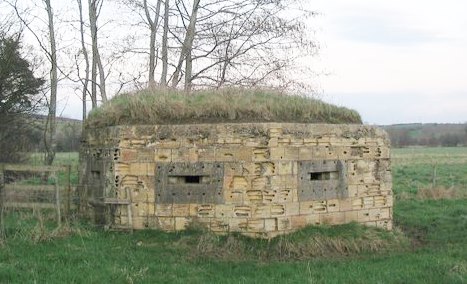
There's a whole thing in STONELANDS where a Special Forces team is discussing the difficulties inherent in teaching the Fae a pillbox exercise.

4f6a7-pillbox-fortification-1.jpg


To a Fae, the idea is insane; why the hell would you send a third of your troops up the middle, directly into incoming fire? (You do it so that the other two-thirds can approach from outside the traverse of the main gun and drop an explosive through the gun slit.) When an elf does fight, they need a damned good reason to put their lives on the line. Especially when they can just melt back into the trees or caves and never see your dumb ass ever again. They don't have heroes like we have here in America; there are no Fae heroes akin to Rocky, or the Karate Kid. To them, it's a type of insanity to risk your life for anything other than your loved ones. Glory? Honor? Wealth? Hell, naw. The aforementioned mushroom expert will be remembered in song as vibrantly as someone who dies from misadventure.

So, yeah. Elves are not perfect. They shouldn't be. Quit making them perfect.
 
God help you if they read you their f*ckin' poetry. It's beautiful, but their poems are the length of novels. (What else are you going to do with all that time?)
Still sounds better than Vogon poetry...

They sound like fun elves. And it makes a lot of sense that someone who lives forever unless killed has a very different approach to death and dying than a human would. After all, what is 1 day of shame if you can spend the next 100 years to make up for it and still have a few hundred more.

Classic Tolkien elves are interesting. The ones we see in Lord of the Rings are idealized. But that's because we see them from the point of view of the hobbits. They're these beautiful, larger than life creatures that lived for millenia. Of course they look like that to someone living in a backwater town in a hole in the ground.

When you get to The Silmarillion though, the elves are still these super-human creatures. But they're full of faults as well. They are proud and haughty. They make mistakes and they fight. It's a very different perspective.
 
Top