Category Archives: Miscellaneous

Exploration Through Story – How Stories Teach Us About Ourselves

Albert Einstein

Albert Einstein

“When I examine myself and my methods of thought, I come to the conclusion that the gift of fantasy has meant more to me than my talent for absorbing positive knowledge.”

-Albert Einstein

When Albert Einstein imagined himself chasing a beam of light, he was able to conclude that the speed of time is relative to how fast one object is moving compared to another.

I’m not a physics guy, so hopefully I got that close to right.

When it comes to things like knowledge or wisdom, there are many ways to explore them.  There’s science, philosophy, and religion.  But what all of these approaches have in common is storytelling.  And, more importantly, creative storytelling.

Is Black and White Fantasy Dead?

Jaime Lannister from Game of Thrones

Jaime from Game of Thrones

Is black and white dead?

No, I’m not talking about film.

With the recent surge in popularity of George R. R. Martin’s A Song of Ice and Fire series (a.k.a. Game of Thrones), fantasy as a genre has gained a new audience. Even those who have not ventured into fantasy before can easily find themselves engrossed in the world of Westeros.

Why is this so?

Typically, fantasy has been known for depicting the struggle between good and evil – a trope that, while tried and true, may be too conventional for today’s audiences. There, I said it.

Fantasy Weapons – the Good, the Bad, and the Ugly

Frodo with Sting

Frodo with Sting

In fantasy, weaponry is something we’ve come to expect to see.  There are wars, battles, even personal fights against a single rival, and that means the combatants need something to fight with. Sometimes fists are enough; sometimes magic is used. But the rest of the time, there are weapons.

One thing fantasy weapons sometimes come under fire for, especially swords, is that they’re all fancy pants spikes and dragon motifs and not a huge amount of practicality.

Below is a catalogue of some weapons you might have read about in fantasy, looking at what makes them good or bad in different ways.

Writing the Military: 5 Biggest Mistakes

kingdom-of-heaven

Kingdom of Heaven

This article is by Joseph Zieja.

I’m an officer in the United States Air Force, and I’ve been wearing the uniform for ten years.  I also write.

I’ve had pieces appear in Daily Science Fiction and some other anthologies across the web and in print.  So I have a tiny bit of writing clout to back up my military experience, and you can lean on that when I tell you that there are a lot of mistakes in the way that writers portray the military in their fiction.

I therefore present to you the Top 5 Biggest Military Mistakes in Fiction, According to Joe Zieja.  I’ll try my best to keep it­ to speculative fiction, since I know that’s who my audience is, but these mistakes extend to all genres.

One last warning:  I’m from New Jersey.  Hold on to your self-esteem.

Co-Authoring with Kids

Nimpentoad

Nimpentoad

This article is by Henry L. Herz.

When my sons were five and seven years old, I wanted to share my love of fantasy with them. Struck by inspiration one day, I came up with a way to share the joy of entering the magical realms of fantasy. I would write a fantasy book for them.

What I did not anticipate was that my boys would give me feedback on the story.

They devised some of the character (“Nimpentoad”) and creature (“Neebel”) names, and made plot line suggestions. And who better to help make the story appealing to kids than other kids? My sons also helped with the art direction. Our artist would give us a rough sketch, and we would provide feedback on details and color palette. My goal of interesting my sons in fantasy transformed into also encouraging them to participate in the creative process.

Stop Writing That Epic! Why New Writers Should Start Small

A new graduate from the Mechanical Engineering department at Miskatonic University wants to get his career going. So he has to decide what he’s going to design first.

He decides to build an aircraft carrier.

Never mind that this is one of the most elaborate, complex pieces of machinery conceivable—the graduate has decided that he’s capable of designing and building something immensely huge and complex, just like the guys who have been doing it for thirty years.

This sounds insane, but it’s exactly what a huge number of novice writers do when starting out their careers. Instead of starting with something manageable—Ray Bradbury famously advised writing short stories for several years before even attempting a novel—new writers often decide that they’re capable of producing a twelve-volume epic saga with hundreds of characters.

Medieval Archery for Fantasy Writers

Jonas Armstrong as Robin Hood

Jonas Armstrong as Robin Hood

In our distant past, archery nearly became a lost art, a useless tool once weapons technology had moved on. If not for the resurgence of popularity in the early to mid-nineteenth century, it might have vanished in Europe and America entirely, being relegated to the more primitive cultures which rely on it as a means to procure food and make war.

But how best to portray archery in a world where magic is common and monsters are not mere wild animals, but horrific creatures bent on destruction?

First, what type of archery are you trying to portray? Fourteenth century longbows firing war arrows on a battlefield? A band of warriors decimating foot soldiers from horseback? A small group of characters hunting or sneaking through an occupied land?

LGBT Characters in Sci-Fi and Fantasy

This article is by Marc Davies.

If you have watched television, read a newspaper, seen a play or been to a movie in the last couple of years, there’s no doubt that you would have been exposed to lesbian, gay, bisexual or transgender people and their issues.

The only way you could avoid it is by living under a rock, and even then you’d probably discover said Rock has a penchant for designer clothes and an obsession with maintaining its rocky skin in fabulous condition.

Whatever your personal views, LGBT people have been readily accepted by much of mainstream media. There are popular movies and sit-coms with gay characters. Literary fiction has embraced gay characters and gay issues. If you go to see the ballet or a musical, you can bet half the cast is probably gay. And pop music embraced gay performers and music long before Elton John and Queen became best sellers.

Should Christians Write Fantasy?

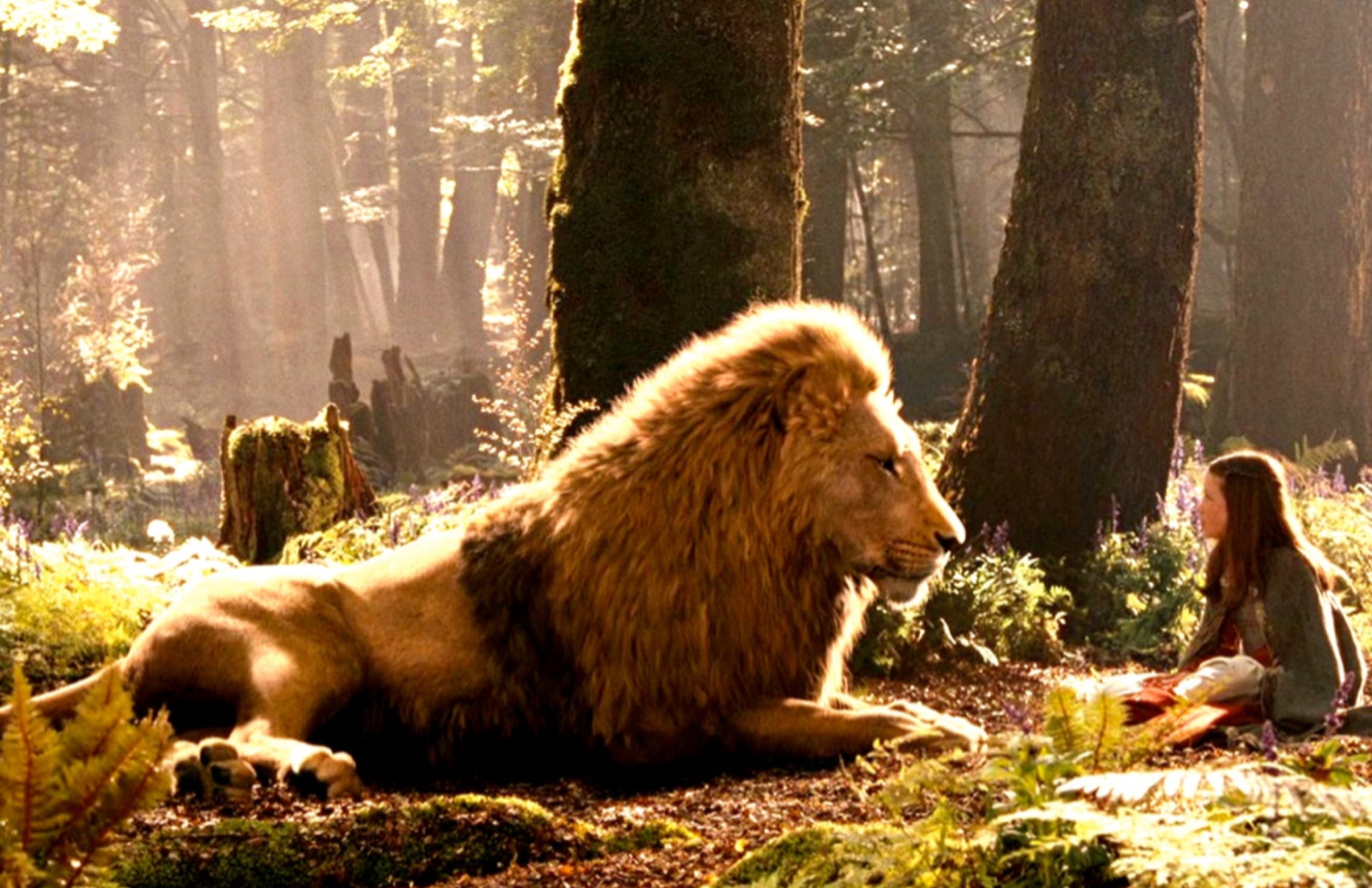
Aslan of Narnia

Is it wrong for Christians to write about magic, wizards and otherworldly beings?

Surprisingly, some people believe so.

Over a decade ago a fundamentalist church not far from my home made headlines by having a Harry Potter bonfire.  Christians from the surrounding area were invited to bring their Harry Potter books to a public burning.  The fact that this event conjured images of Nazi Germany didn’t deter the organizers, as they were determined to rid the world (or at least the greater Pittsburgh area) of the influence of J.K. Rowling and her supposed promotion of witchcraft.

Recently this question has arisen in our writing forums, and this has led to a thought-provoking discussion.  One of our members eloquently expressed the crux of the issue:

Why I Don’t Write About Evil

Completely, undoubtedly, irredeemably evil?

This article is by Martin White.

Every epic needs an opposing force, and in most high and heroic fantasy, that opposing force is evil. Sometimes, it’s literal Evil with a capital E, embodied in an army of twisted champions. Other times, it’s the sort of evil that kicks puppies and kidnaps damsels. Either way, it contains within it the author’s conception of the things that humanity would be better off without.

I don’t typically write about evil people. Many of my characters, both protagonists and antagonists, have traits that could be called evil, but I’ll never have more than one character per story who’s completely, undoubtedly, irredeemably evil. More often, the concept shows up only in first-person perspectives, and it’s called into question whenever the accuracy of those perspectives becomes questionable. In this essay, I aim to show why.